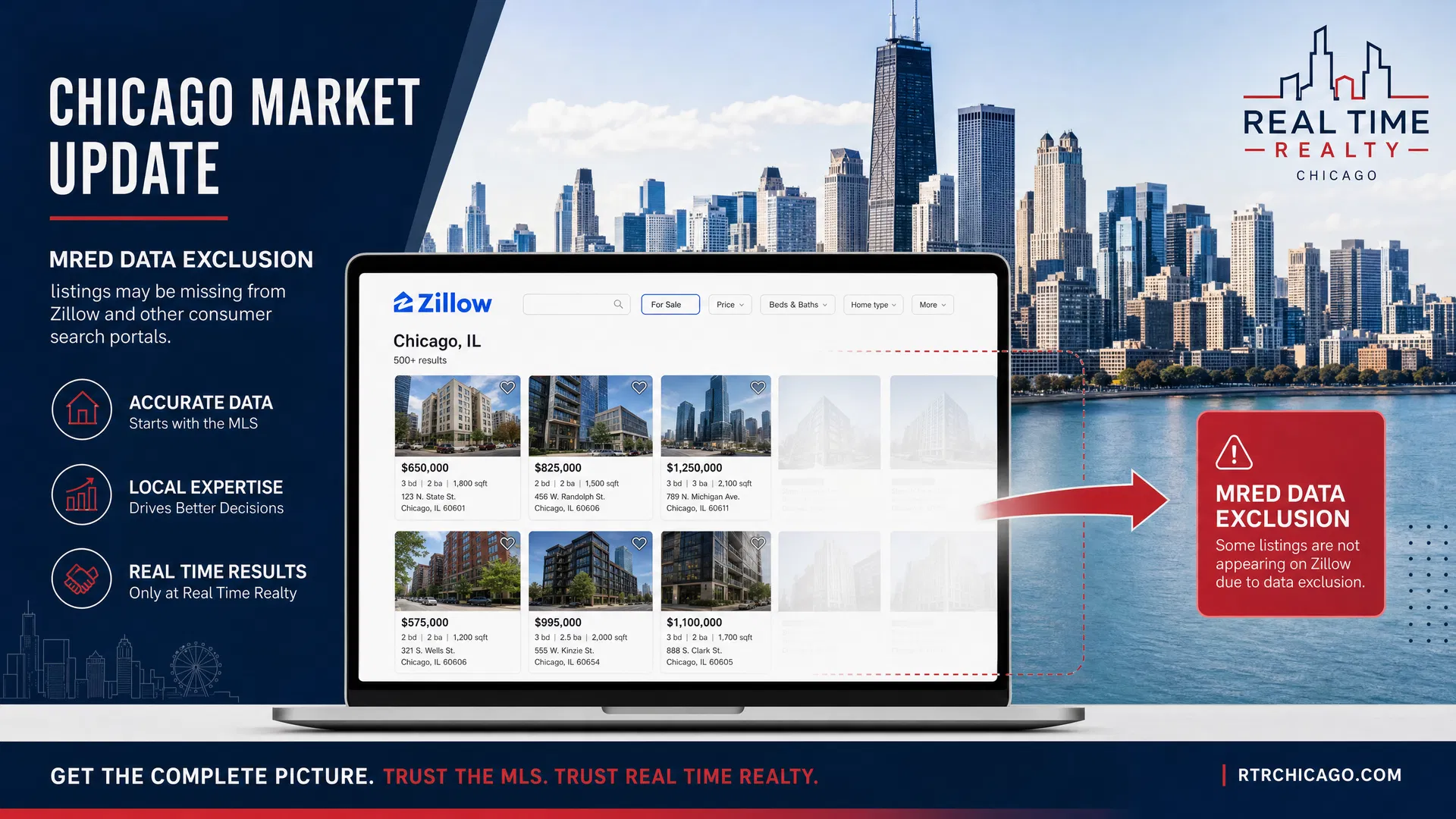
If you've been searching for homes in the Chicago area recently, you may have noticed something unusual: thousands of listings have disappeared from Zillow. This isn't a technical glitch. It's the result of a significant shift in how the Midwest Real Estate Data (MRED) Multiple Listing Service is handling data access—and it's creating real consequences for buyers and sellers across the region.
What Happened?
In October 2025, MRED implemented new rules that fundamentally changed how listing data is shared with third-party platforms like Zillow. The result? Over 43,000 Chicago-area properties were removed from Zillow's search results, leaving buyers with incomplete market visibility and sellers with reduced exposure for their homes.
This wasn't a gradual policy evolution. MRED specifically rewrote its rules to exclude Zillow's data feed, marking a dramatic departure from decades of industry practice where MLSs worked to maximize listing visibility across all major platforms.
Why Does This Matter?
For buyers, fewer listings visible in one place means a fragmented search experience. Instead of seeing the complete market on Zillow, you're now seeing only a portion of available homes. This can lead to missed opportunities—the perfect home for your family might exist, but you won't find it on the platform you trust.
For sellers, the impact is even more direct: reduced visibility means fewer potential buyers seeing your home. In a competitive market, visibility is everything. When your listing isn't appearing on one of the nation's most popular real estate search platforms, you're losing exposure to a significant portion of qualified buyers.
The Bigger Picture
This conflict isn't really about data compliance—it's about market control. The dispute centers on how different real estate companies handle listings, particularly around exclusive or private listing strategies. MRED's new rules were implemented after pressure from Compass, a major real estate brokerage, to restrict Zillow's access to certain types of listings.
Zillow's position is straightforward: they believe in transparency. Their policy is that listings publicly marketed to some buyers shouldn't be hidden from others. This philosophy aligns with what most consumers expect—an open, transparent housing market where all available homes are visible to all potential buyers.
What Should You Do?
If you're buying in the Chicago area, don't rely on any single platform. Check multiple listing sources—Zillow, Realtor.com, and local MLS searches—to ensure you're seeing the complete market. Work with a knowledgeable local agent who has direct MLS access and can show you all available properties.
If you're selling, make sure your agent is using every available channel to market your home. Direct MLS access remains the most comprehensive way to reach other agents and buyers. Ask your agent how they're compensating for reduced Zillow visibility and what additional marketing strategies they're employing.
Looking Ahead
This situation highlights a growing tension in real estate between data accessibility and competitive positioning. As a consumer, your best protection is working with a trusted local agent who understands the market and can navigate these platform changes on your behalf.
The Chicago real estate market remains strong, but transparency and access matter. Whether you're buying or selling, make sure you're not missing opportunities because of data restrictions you didn't know existed.